
Who Were the Mendicant Orders?
The Mendicant orders spread from southern Europe north of the Alps and spread in popularity thanks to their mission of poverty, preaching, and charity. The Mendicant orders included the Dominicans and Franciscans, who built convents in urban centers rather than remote locations like their monastic counterparts (such as the Benedictines). The way land and buildings were acquired in Northern Europe was through the generosity (and guilt!) of the aristocracy and royalty. Case in point is that Alexander II, the king of Scotland, provided the land and funding for a Dominican friary in Edinburgh as early as 1230 (!) and James IV provided the land for a Franciscan friary in Edinburgh in the mid 15th century.

Why Were Friaries Built on the Edges of Towns?
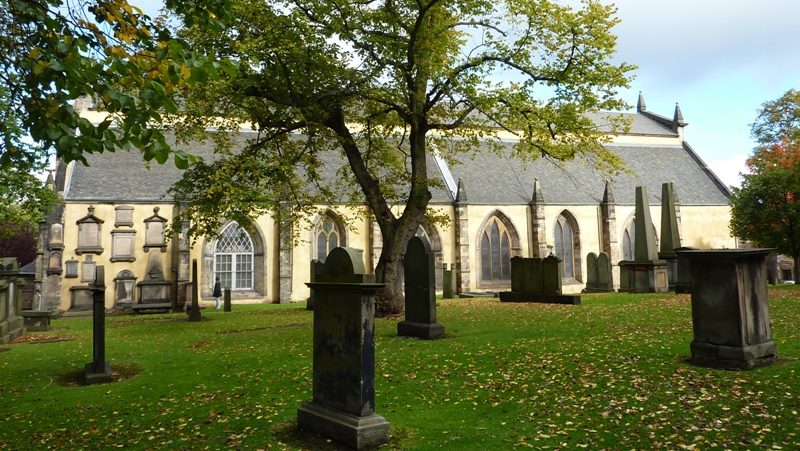
Now where in urban centers were these institutions located? Care had to be taken not to step on the toes of secular clergy (i.e., priests, bishops, etc.) and property in urban centers was extremely expensive anyway. As such, friaries were often located on the outskirts of towns near city walls where land was cheap and plentiful (and sometimes undesirable since this was also the location of less desirable trades, like tanning). If we look at the present day map of Edinburgh (and this is an acceptable document because Edinburgh remained pretty much unchanged from the 12th century through to the latter decades of the 18th century. And the Old Town of Edinburgh is largely the same, with the exception of some later interventions, such as the George IV, Waverley Bridge, and North/South Bridges), we can see that both the Dominican and Franciscan monasteries were on the edge of the city. St. Mary’s Street was originally the dividing line between the burgh of Edinburgh and the burgh of Cannongate; a wall and tollbooth divided them, as we can see here. These were two separate cities smashed together. Edinburgh was dominated by Edinburgh Castle, aka, the monarchy and the Cannongate was dominated by Holyrood Abbey, aka, the Church. Keep note that the palace was not built until the 16th century. So the Dominican monastery was found at the bottom of Blackfriars Wynd (Dominicans were called black friars) near the tollbooth and Greyfriars Kirk (Franciscans were called grey friars) was found on the western edge of the city below Edinburgh Castle and St. Giles Cathedral. Both convents were also at the bottom of steep hills where rain and sewage drained. Yucky. Keep in mind that while Greyfriars Kirk still exists (although rebuilt), Blackfirars was destroyed in the years leading up to the Scottish Reformation in the 1560s.

Leave a Reply