
Topics
Medieval
The Middle Ages are routinely underestimated. Far from a dark interlude between Antiquity and the Renaissance, the medieval period produced extraordinary art, complex institutions, and ideas that shaped everything that followed. These essays explore medieval Europe on its own terms — from the theology behind illuminated manuscripts and burial practices, to the civil wars and banking revolutions that built the cities we still visit today.
-
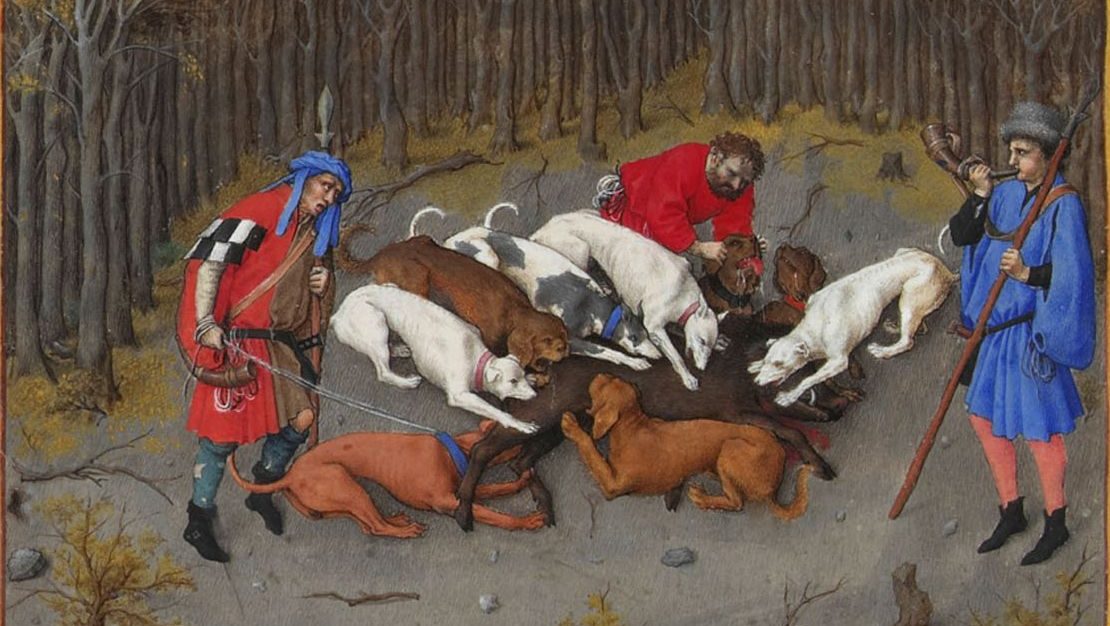
The Very Rich Hours of the duke of Berry, Part 10: December Page
The December page of Les Très Riches Heures du Duc de Berry highlights the significance of boar hunting in noble culture, representing dominance, masculinity, and social ritual. It illustrates hunting’s role in training young aristocrats and reinforcing social hierarchies, alongside…
-

The Very Rich Hours of the duke of Berry, Part 9: October and November Pages
The October and November pages highlight rural life in 15th-century France. October portrays farmers sowing seeds along the Seine, showcasing their struggles with birds and landownership issues. November features truffle hunting with pigs, illustrating historical agricultural practices and the land…
-
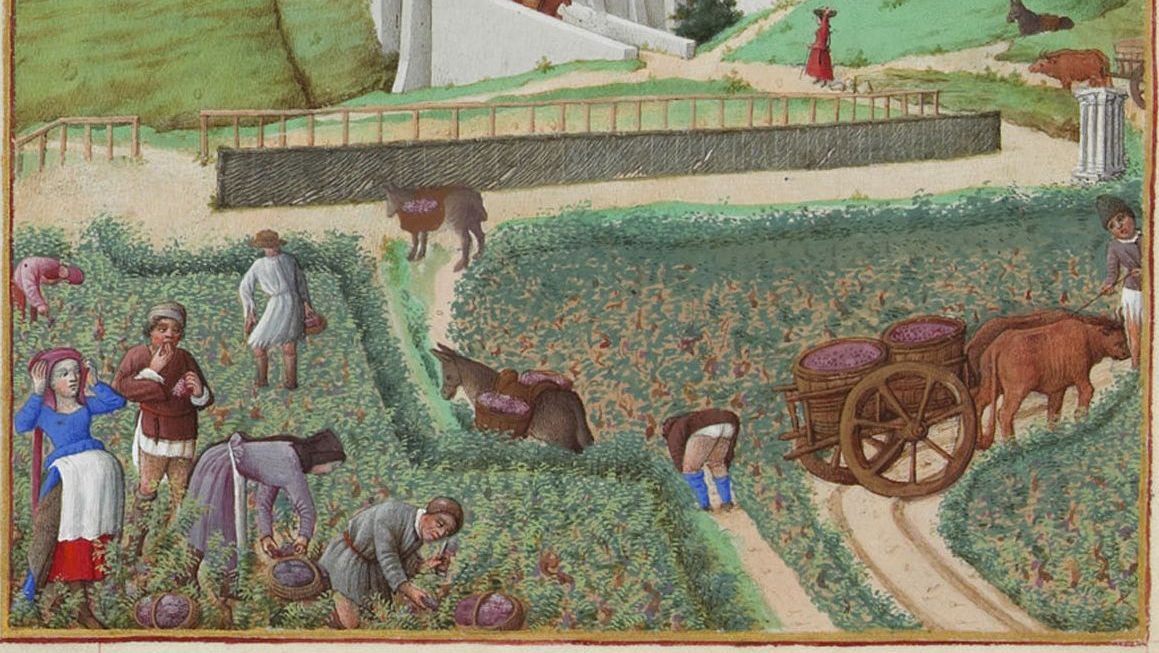
The Very Rich Hours of the duke of Berry, Part 8: September Page
The page illustrates a two-phase painting depicting a grape harvest and knightly jousting, highlighting the stark societal divide in the Middle Ages. Peasants are shown labouring with a voyeuristic tone, while rituals like jousting remain exclusive to the elite. The…
-

The Very Rich Hours of the duke of Berry, Part 7: August Page
This page juxtaposes the aristocracy and the peasantry simultaneously. Aristocrats enjoy the sport of hawking, where spaniels and hawks worked together to capture their prey while mounted hawkers watched. The peasants, meanwhile, harvest grain and swim in the summer heat.…
-
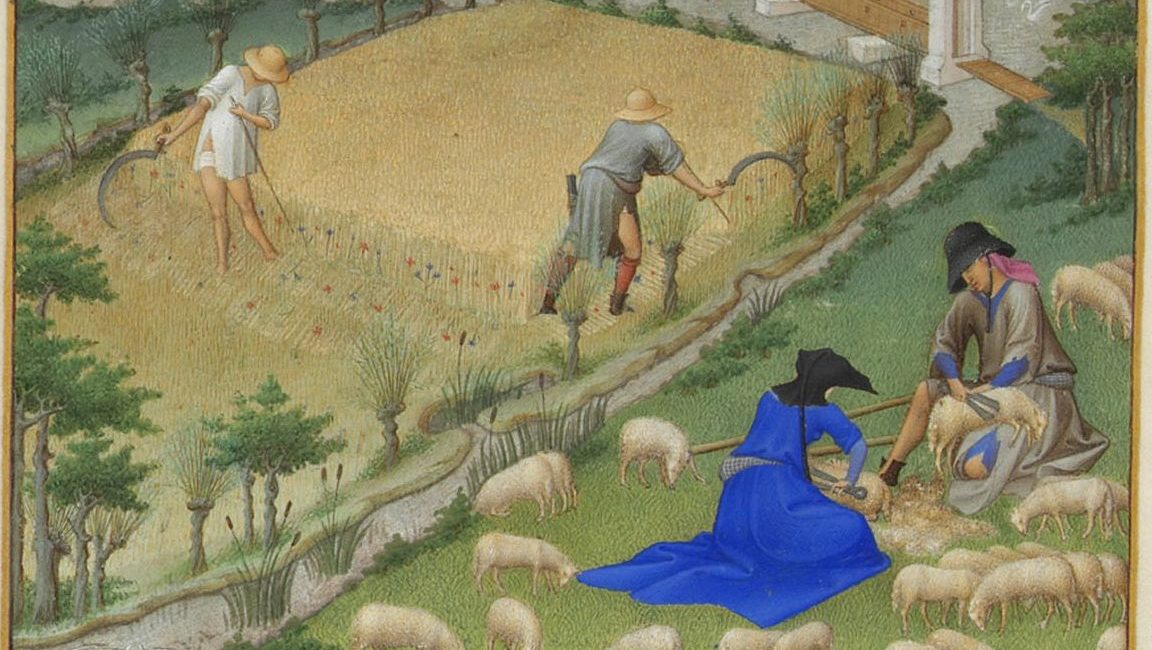
The Very Rich Hours of the duke of Berry, Part 6: July Page
The July page illustrates summer harvest activities and sheep shearing near the Château of Poitiers, enhanced by the duke of Berry. It depicts a thriving agricultural setting, with varied clothing among peasants indicating differing wealth levels. The castle serves a…
-

The Very Rich Hours of the duke of Berry, Part 5: June Page
The June page, created by Barthélemy d’Eyck in the 1480s, illustrates peasant haymaking activities vital for livestock feeding. The scene contrasts the nobility’s attire with peasant clothing, reflecting social hierarchies. It also highlights the agricultural divide from Parisian aristocracy, idealising…
-

The Very Rich Hours of the duke of Berry, Part 4: April & May Pages
The April and May pages illustrate the lives of medieval nobility, highlighting a betrothal and May Day festivities. Marriage served as a political tool, forging alliances, while leisure activities underscored the divide between aristocrats and peasants. Noble attire, extravagant celebrations,…
-

The Very Rich Hours of the duke of Berry, Part 3: March Page
The March page illustrates a peasant scene with Château de Lusignan, highlighting the duke of Berry’s influence. Peasants prepare land for planting, reflecting medieval agricultural practices. The shift from feudalism to tenancy is evident, as communal farming remains vital. This…
-

The Very Rich Hours of the duke of Berry, Part 2: February Page
The February page of Les Très Riches Heures du Duc de Berry presents a peasant scene contrasting with January’s depiction. It features vulgarly depicted peasants by a fire. Surrounding elements highlight their subservient lifestyle under the duke of Berry, amidst…
-

The Very Rich Hours of the duke of Berry, Part 1: January Page
The January page of Les Très Riches Heures du Duc de Berry illustrates the duke at an extravagant Epiphany feast, showcasing medieval traditions of communal dining and social hierarchy. It reflects the duke’s status, confidence, and piety in his prayer…