
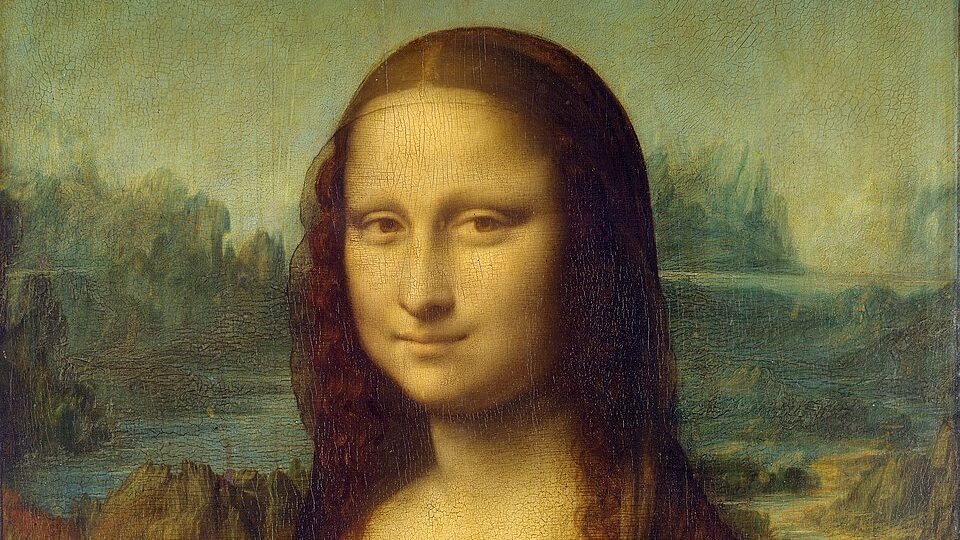
The Mona Lisa is one of the most famous painting in the world. It is also one of the most misunderstood. Examining the Mona Lisa has long puzzled art lovers.
Writers and critics have reached for words like mysterious and enigmatic to describe it — as if the painting’s power lies in what it conceals. It doesn’t. This series argues that the Mona Lisa is remarkable for entirely different reasons, and that understanding those reasons requires looking at it on its own terms: as a Renaissance portrait, made for a specific person, at a specific moment in history.
To understand why the Mona Lisa looks the way it does, we first need to understand the world that produced it.
In This Series
Renaissance · Art History
Part 1: She’s JUst Uncanny Valley
Before we can understand the Mona Lisa, we need to understand the tradition it belongs to — what portraiture is, why it fell out of fashion in the medieval period, and why it came back. The answer begins with a set of questions every art historian asks.
Renaissance · Art History
Part 2: Medieval Stylistic Shifts
Two centuries before Leonardo picked up a brush, artists in parts of Western Europe were quietly transforming how they depicted the human body. From the sculptors of Reims to Giotto’s revolutionary naturalism in Florence, this essay traces the long artistic shift that made the Mona Lisa possible.
Renaissance · medieval · Art History
Part 3: Portraiture in the Middle Ages and Early Renaissance
The essay explores the emergence of Humanism during the medieval-Renaissance period, highlighting the influence of Antiquity on intellectual creativity. It discusses the impact of the Bubonic Plague on society and the connection between personal piety and art, particularly in donor portraits like the Scrovegni Chapel. Political dynamics in Florence under Cosimo de’ Medici also shaped early Renaissance portraiture.
Renaissance · Art History
Part 4: Let’s Talk about Mona Lisa Finally!
The Mona Lisa, painted by Leonardo da Vinci in the early 1500s, showcases his mastery in creating depth and humanity through techniques like sfumato. Celebrated for its unique portrayal of emotion and artistry, the painting gained fame after its theft in 1911, solidifying its status as a cultural icon and source of intrigue.

Leave a Reply