
Part 1: What is Portraiture? When Was It Employed?
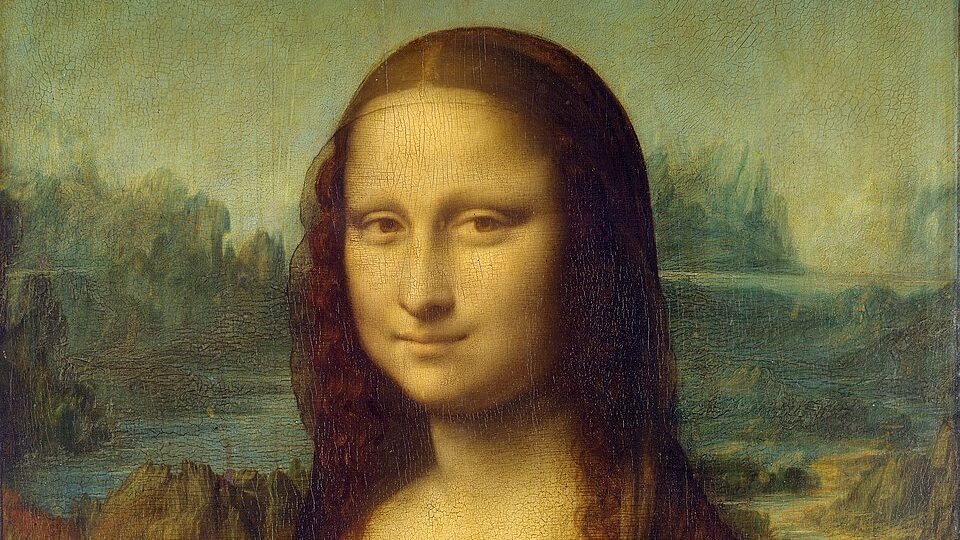
The goal of this essay is to explain the Mona Lisa painting. Most people overanalyze Mona Lisa using the wrong information. That’s okay, but it does make things annoying for art historians. But wouldn’t you like to understand why people go ape-shit over it? Why it’s so prominent in our modern culture? Well, sit your ass down and I’ll learn you something new.

The Seven Questions Every Art Historian Asks
Before I start, I need to tell you some tricks of the trade. You need to ask yourself these questions:
- Who painted it? (Most people stop here)
- Who paid for it?
- What does it depict?
- When was it made?
- Why was it made?
- How was it made?
- Where was it made?
Starting with those questions is how you can enable easier paths of research; ask yourself as many of these questions as possible and when you find yourself unable to answer them, that’s a good place to start researching. Luckily for you, I’ve already done all that background research so we can have some fun.
We know that it was commissioned by Francesco del Giocondo in the early years of the 1500s. It was likely a wedding portrait of his young bride, Lisa Gherardini; both were on the periphery of Florence’s high society. This is the first thing we need to parse out: why does it matter that it was a wedding portrait? And this is the little question from which this discussion will emerge. This is how the kernel of a research project begins!
There are a variety of answers we need to find in order to understand Mona Lisa (or La Jaconde or La Giaconda as it’s called in French and Italian, respectively). We need to begin with the emergence of portraiture as a genre of painting in the Renaissance. Portraiture—an image or sculpture that depicts a specific person (who greatly influences how they’re portrayed)—is ancient; it has also long been used for socio-political purposes.
Early History of Portraiture
The elites of ancient Egypt and the ancient Greco-Roman world all found portraiture to be an effective and efficacious tool to communicate with people (either political rivals or with social inferiors—hate this term—which are two distinct genres of people!). What is it they were trying to communicate? Power in different flavours. But, there was no one way to accomplish this goal: one could depict oneself as a military leader; an oracle or philosopher; a statesman. The list goes on and on.
Eventually, portraiture fell out of favour by the late medieval period (ca. 1100-1400). However, just because portraiture as a genre (meaning, the sitter was the sole focus) fell out of favour does not mean it completely disappeared. We can see plenty of portraits incorporated into Christian iconography (although this is more commonly seen in the early 1400s). This is a direct reflection of the theological and religious shifts in the previous centuries. All you need to know is that the concept of Christ’s divinity was the chief focus for worshippers and theologians alike during the early Middle Ages. With the emergence of Scholasticism (see St. Thomas Aquinas) and the Mendicant orders (think the Franciscans, the Dominicans, etc.) almost concurrently in the twelfth and thirteenth centuries, there began a shift in how people thought about Christ. Indeed, the focus shifted to Christ’s humanity and the goodness he spread during His mortal life. We see this directly reflected in artistic shifts.


Leave a Reply